

Summary
Facebook is limiting external links, but that doesn't mean your business has to lose visibility. Discover practical strategies that are helping businesses generate engagement, build relationships, and drive leads without relying on constant link posting, including content repurposing, "comment for the link" campaigns, and stronger email marketing.
If you recently received a notification that your Facebook Business Page is limited to just two external-link posts per month unless you subscribe to a paid Meta plan, you’re probably asking the same question many business owners are: “How am I supposed to drive traffic to my website now?”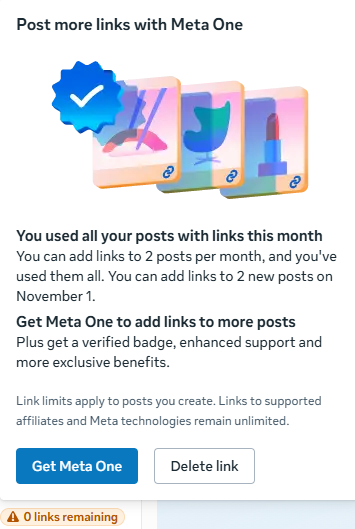
According to industry news, Meta has expanded its testing and rollout of restrictions on external-link posting for many business pages, while continuing its long-standing focus on keeping users on Facebook rather than sending them to outside websites. At first glance, this feels like another hurdle for small businesses already working hard to maintain visibility online.
Before you reach for your credit card, there’s an important aspect to consider. The businesses that perform best on Facebook in 2026 are often not relying on link posts anyway. In fact, this shift may be encouraging marketers to adopt strategies that generate more engagement, build stronger relationships, and ultimately produce better results.
Why Facebook Is Limiting Links
Facebook’s business model depends on keeping users engaged inside its ecosystem. Over the last several years, the platform has steadily reduced the visibility of posts containing external links. Only a small percentage of widely viewed Facebook content now contains links to websites outside the platform. From Meta’s perspective, users who stay on Facebook view more content, engage with more ads, and spend more time on the platform. This means businesses can no longer rely on the old approach of publishing a blog, posting the link and expecting website traffic. Those days were already becoming less effective long before the current restrictions appeared.
The Good News: Facebook Can Still Be a Powerful Marketing Tool
The key is shifting your mindset. Instead of using Facebook primarily as a traffic-generation tool, use it as a relationship-building and authority-building platform. Think of Facebook as the top of your marketing funnel. Your goal isn’t necessarily to get the immediate click. Your goal is to start a conversation, establish expertise, and motivate people to take the next step.
When approached this way, Facebook can still deliver tremendous value for businesses.
Strategy #1: Replace links with “Comment for the Link”.
One of the most effective alternatives is the “comment for the link” strategy. So instead of posting “Read our latest blog post here,” try “We just published a guide on improving website SEO in 2027. Comment SEO below and we’ll send you the link.” This approach creates engagement, while allowing you to deliver the resource via direct message. It also generates engagement from people who are truly interested in your post topic. It often produces significantly more comments, conversations, and visibility. Even better, every comment signals engagement to Facebook’s algorithm, which can increase the reach of your post.
Strategy #2: Deliver value directly on Facebook
Many businesses treat social media as a billboard. Unfortunately, that approach rarely works anymore. Instead of posting the headline of your blog and expecting people to click through, share the actual value in the post itself. For example, if you’ve written a blog on website SEO, turn it into:
- Five individual tips for improving website SEO
- A carousel graphic showing key aspects of web SEO
- A short video demonstrating a new way to optimize for search
- A quick infographic with statistics on the importance of web optimization
- A checklist of actions to take to improve your website.
When people can consume valuable information without leaving Facebook, they’re far more likely to engage with it. The added benefit is that your expertise becomes visible immediately rather than hidden behind a link.
Strategy #3: Turn one blog into multiple Facebook posts
Most businesses underutilize their content. A single blog post can easily become an entire month’s worth of Facebook content. For example, one article could generate:
- Four educational posts that are posted weekly throughout the month
- Three quote graphics that highlight your expertise
- One infographic that captures the outcome delivered
- Two short videos that highlight different aspects of your written content
- One customer discussion topic or customer results
- One FAQ post
This approach allows you to maximize content investments while reducing dependence on website links. It also aligns with Facebook’s preference for native content.
Strategy #4: Use Facebook to start conversations
Social media was designed to be social. Businesses that focus exclusively on broadcasting messages often struggle with declining reach. Instead, create content that encourages discussion. Examples could include:
- Industry predictions
- Customer challenges
- Common misconceptions
- Frequently asked questions (increasingly important on your website too. See why here.)
- Behind-the-scenes stories
- Polls and surveys
Questions generate comments. Comments generate visibility. Visibility generates opportunities. The more conversations you create, the less you’ll depend on link clicks.
Strategy #5: Build your email list aggressively
Every algorithm change should remind business owners of one critical marketing truth:
You don’t own your social media audience. Facebook could change its rules tomorrow.
LinkedIn could update its algorithm next month. Instagram reach can fluctuate without warning. What do you actually control?
- Your email database
- Your customer list
- Your CRM
- Your website
Smart professionals use social media to support email-list growth, rather than relying on social channels as their primary communication vehicle. If Facebook’s new restrictions motivate you to invest more heavily in email marketing, that could be one of the best outcomes possible. (For tips, see “Tips for Building a Quality eNewsletter Subscriber List.”)
Strategy #6: Focus on other traffic sources
If your goal is qualified website traffic, Facebook should not be your only channel. Consider strengthening efforts in:
- SEO: Search traffic often produces highly qualified visitors because users are actively looking for information, products, or services.
- Google Business Profile: For local businesses, a well-optimized Google Business Profile can generate significant website visits, phone calls and leads.
- Email Marketing: Email remains one of the highest-converting digital marketing channels available.
- LinkedIn: For B2B companies, LinkedIn frequently delivers higher-quality website traffic than Facebook because users are already operating in a professional mindset.
Diversification reduces your reliance on any single platform. Don’t put all your eggs in one basket.
Strategy #7: Use your two monthly link posts on Facebook wisely
If your Facebook Business Page is limited to two link posts each month, treat them like premium advertising space. Ask yourself, “What are the two most important opportunities this month?” Perhaps it’s a major event registration, a webinar, a lead magnet like a downloadable content piece, a seasonal promotion or a new service launch. Instead of using links routinely, reserve them for your highest-priority business objectives. This ensures you’re extracting maximum value from the opportunities available.
The Bigger Lesson for Business Owners
While Facebook’s new linking restrictions may initially seem frustrating, they also highlight a broader shift happening across digital marketing. Platforms increasingly reward content that keeps users engaged within their ecosystem. Businesses that adapt by focusing on education, conversations, community and relationship-building will continue to thrive.
The truth is that most successful Facebook strategies were already moving away from heavy link posting long before these restrictions appeared. Rather than viewing this change as a setback, consider it an opportunity to improve your content strategy. Create content people want to engage with. Build relationships before asking for clicks. Grow assets you own, such as your website and email list. Use Facebook not as a traffic machine, but as a trust-building platform that helps move prospects closer to becoming your customers.
The businesses that make this shift will be far less affected by the next algorithm change, whatever it may be. Need help adjusting? Contact us to begin your next powerful shift.








Leave A Comment