

Summary
In a world where your audience is flooded with messages every day, facts are easy to forget but stories stick. They create connection, build trust and make your brand memorable, which is exactly why storytelling has become one of the most powerful tools in modern marketing.

If you’ve spent any time in marketing over the past decade, you‘ve seen the shift. We’ve moved from feature-driven messaging to experience-driven messaging, from selling to connecting, from telling people what we do to showing them why it matters. At the center of that evolution is storytelling.
There is a simple truth many businesses miss. People do not remember your list of services. They remember how you made them feel. In a world where your audience is seeing thousands of marketing messages every day, emotional connection is not a nice-to-have. It is the differentiator.
Seth Godin said it best. Marketing is no longer about the stuff that you make, but about the stories you tell.1 That’s especially true for small and mid-sized businesses. You may not have the budget of a national brand, but you do have something far more powerful. You have a real story.
Why Storytelling Works in Modern Marketing
Storytelling is not a trend. It’s rooted in human behavior. Research consistently shows that people are significantly more likely to remember information when it is delivered through a story rather than as standalone data. In fact, stories can make facts up to 22 times more memorable.2
Case in point: as a child, would you have preferred to hear a lecture from a parent on what you should do or a story with a lesson woven in? Yes, the story is more engaging and memorable. All of that matters when you’re trying to stand out in a crowded marketplace. If your audience remembers you, they are far more likely to choose you.
Storytelling also drives business results. Brands that use storytelling effectively can see conversion increases of around 30 percent. More importantly, storytelling builds trust and emotional connection, which leads to long-term loyalty.3
As Harvard Business School professor Jill Avery explains in “What Is a Brand Story?”, a strong story captures attention, creates emotion and ultimately drives people toward action.4 For SMBs, that is a big part of the game.
Storytelling Levels the Playing Field for SMBs
One of the biggest misconceptions I hear from business owners is that storytelling is something large brands do. Actually, this can very much be used by smaller businesses. SMBs are often better positioned to tell authentic, compelling stories because they are closer to their customers. You know their challenges. You understand their frustrations. You are part of the same community. Plus, SMBs typically have less organizational clutter and approval processes to work through in order to tell their story. (Enterprises can certainly succeed at storytelling but usually aren’t as nimble at doing so.)
Here’s where the opportunity becomes real. Studies show that the most engaging brand stories are often about ordinary people and relatable experiences. That means your client success stories, your team journeys and your company origin story are not just content. They are strategic assets.3 When you tell those stories well, you are no longer just another vendor. You become a partner who understands and cares.
What Makes a Story Connect Emotionally?
Not all storytelling is effective. Simply sharing information in paragraph form is not enough. Great marketing stories follow a structure that mirrors how people experience life. First, there is a clear challenge or conflict. This is where your audience sees themselves. What problem are they trying to solve? What obstacle is standing in their way?
Second, there is a journey. This is where your brand enters the picture. Not as the hero, but as the guide. Your role is to help your customers navigate the challenges.
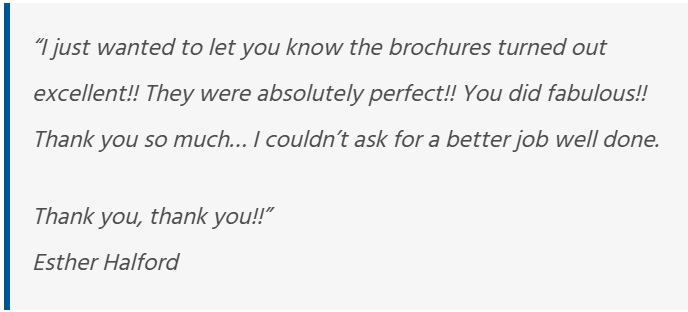
Finally, there is a resolution. This is the transformation. What does success look like after working with you? That story is even stronger if you can offer real success stories with quotations from clients who benefited from you resolving their issues. Show prospects that you have proven experience with helping customers just like them. (As an example, take a look at our client testimonials and consider how you could share your own references. Let your customers tout your strengths.)
This structure works because it creates empathy. Your audience can see themselves in the story and begin to imagine their own outcomes. That’s where marketing shifts from informational to influential.
Practical Ways to Use Storytelling in Your Marketing
This is where I see many businesses get stuck. They understand the concept but aren’t sure how to apply it. The good news is that storytelling isn’t limited to one platform or format. It should be integrated across everything you do.
Your website should clearly tell your brand story, including why you exist and who you serve. Your case studies should go beyond results and illustrate the journeys your clients have experienced. Your social media should highlight real people, real moments and real outcomes. Your email marketing should feel like a conversation, not a broadcast. Your leadership voice should consistently reinforce your point of view and values.
When storytelling is consistent across these touchpoints, it builds a cohesive brand experience. It also answers the question every prospect is asking, whether they say it out loud or not: can I trust this company to understand me and deliver results?
The Role of Authenticity in Storytelling
If there’s one area where storytelling can fall flat, it’s authenticity. Audiences are incredibly savvy. They can spot a manufactured story immediately. When they do, it erodes trust, instead of building it.
Research shows that authenticity is one of the key factors influencing which brands people choose to support.3 That means your stories need to be grounded in truth. Real client experiences, real challenges and real outcomes. This does not mean every story needs to be polished. In fact, the opposite is often more effective. Sharing lessons learned, obstacles overcome and even moments of uncertainty can make your brand more relatable. Authenticity is not about perfection. It is about credibility.
Emotional Connection Drives Long-term Growth
There is a reason storytelling continues to gain traction across industries. It works. When you create emotional connection, you’re doing more than generating leads. You’re building relationships.
Customers who feel connected to your brand are more likely to stay loyal, refer others and advocate for your business. In a competitive market, that kind of loyalty is invaluable. According to recent data, a majority of consumers believe storytelling helps brands form stronger connections with customers. That connection is what transforms one-time buyers into long-term clients.2
Storytelling is not a tactic you layer on top of your marketing. It’s the foundation of how you communicate your value. For SMBs, this is a powerful opportunity. You don’t need a massive budget to connect with your audience. You need clarity, consistency and a willingness to share the stories that already exist within your business.
When you approach your marketing through the lens of storytelling, everything becomes more focused. Your messaging becomes more human. Your brand becomes more memorable. Your audience becomes more engaged.
At Tell Your Tale Marketing and Design, we believe every business has a story worth telling. The question is whether you are using it to its full potential. The businesses that win are not the ones that talk the most. They are the ones that connect the best.
Interested in telling your company’s story? Contact us to start the conversation.
Sources
- Pfaff, Alison. “10 Compelling Quotes about the Power of Storytelling for Brands,” The Heart StoryStudio. Sep 16, 2019. https://hubspot.hearststorystudio.com/blog/10-compelling-quotes-about-the-power-of-storytelling-for-brands
- Nash, Bill. “Storytelling Statistics 2026: 94+ Stats & Insights [Expert Analysis].” Marketing LTB. https://marketingltb.com/blog/statistics/storytelling-statistics/
- “Storytelling Marketing Statistics: Key Insights for Effective Campaigns.” LeapMesh. January 27, 2024. https://leapmesh.com/storytelling-marketing-statistics/
- Heinrich, Ally. “What Is a Brand Story? The Importance & 5 Compelling Examples.” January 14, 2025. https://online.hbs.edu/blog/post/brand-story








Leave A Comment