

Summary
We explore how AI is reshaping the sales and marketing landscape for SMBs, and how you can apply it to your own business to increase visibility, deepen trust and accelerate growth.

AI-Powered Marketing for B2B
Artificial intelligence (AI) is transforming how SMBs engage and sell. How can you use this smart technology to deepen business relationships, personalize outreach and drive scalable growth? AI is a practical, powerful tool that SMBs can use to elevate customer engagement and boost sales. For B2B-focused organizations, where relationships and relevance are critical, AI offers a way to scale personalization, streamline operations and uncover new opportunities with both existing clients and prospects. With a bit of human guidance, AI can take your original content and quite quickly create marketing content that’s tailored to different audiences, mediums and more.
In this post, we explore how AI is reshaping the sales and marketing landscape for SMBs, and how you can apply it to your own business to increase visibility, deepen trust and accelerate growth.
Why AI-Powered Marketing Matters for SMBs in the B2B Space
B2B buyers are increasingly expecting the same level of personalization and responsiveness they experience as consumers. Still, many organizations struggle to deliver that at scale. AI helps bridge this gap by:
– Automating repetitive tasks like lead qualification, follow-ups and content distribution
– Personalizing outreach based on behavior, preferences and purchase history
– Predicting customer needs using data-driven insights
– Improving sales productivity by freeing up time for strategic conversations
According to McKinsey, nearly 20% of B2B decision makers are already implementing generative AI use cases to enhance buying and selling processes.1 The opportunity is real—and growing but the majority of organizations still haven’t embraced this innovation to strengthen their marketing and sales efforts.
Use Case 1: Smarter Lead Generation and Qualification
AI-powered tools can analyze website visits, email interactions and social media engagement to identify high-potential leads. Instead of relying on gut instinct or manual sorting, AI helps you:
– Score leads based on likelihood to convert
– Segment audiences by industry, behavior or lifecycle stage
– Trigger personalized outreach sequences automatically
For instance, HubSpot offers tools that use AI predictive analytics to anticipate which leads are more likely to convert, helping organizations to prioritize outreach to the highest potential converts. This means your sales team spends less time chasing cold leads and more time nurturing warm ones.
Tip: Use AI-driven CRM platforms like HubSpot to automate lead scoring and route qualified leads to your team in real time.
Use Case 2: Personalized Email and Content Marketing
Your monthly newsletter and blog are already great tools for visibility (if you are publishing with a regular cadence). AI can take them further by:
– Tailoring content recommendations based on reader behavior
– Optimizing send times for higher open rates
– A/B testing subject lines and CTAs to improve click-throughs
– Generating content ideas based on trending topics and SEO gaps
Tools like Mailchimp now offers AI features that suggest subject lines, segment audiences and even write email copy. We get a kick out of drafting our own subject lines and testing that against what MailChimp’s AI tool suggests. (NOTE: A/B testing, advanced segmentation and Intuit Assist with MailChimp may only be available on varying paid plans, rather than free plans.) For tutorials like the one captured below, see Paul Jarvis’ tutorials on YouTube.
Tip: Use AI to analyze which blog topics drive the most engagement, then repurpose them into social posts, videos or lead magnets.
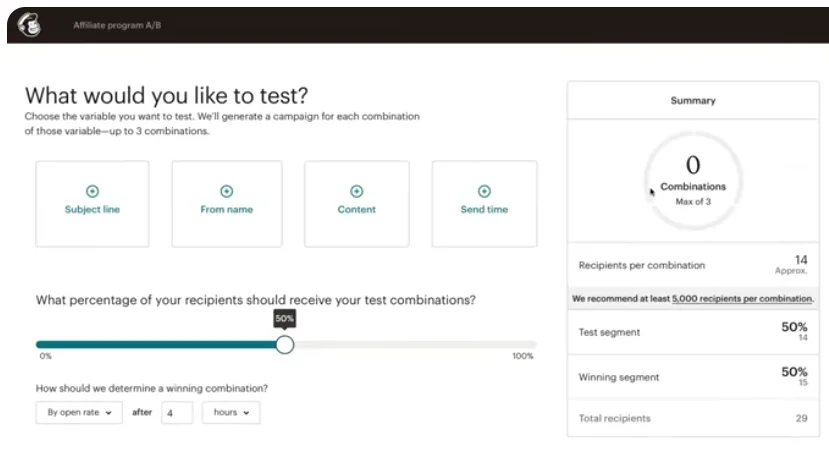
Image Courtesy: Paul Jarvis' tutorials on YouTube
Use Case 3: Enhancing Sales Conversations with AI Agents
AI agents—whether chatbots or voice assistants—can handle initial inquiries, schedule meetings and even answer product questions. For B2B SMBs, this means:
– Faster response times for prospects
– 24/7 availability without extra staffing
– Consistent messaging across channels
Taking AI agents a step further, consider using them to train your staff on how to have engaging and successful sales conversations with warm leads. I participated in a leadership course earlier in the year that used AI-powered simulations by Mursion to help practice coaching skills with Avatars. In each session, a different Avatar mimicked real-life employee scenarios where I needed to encourage certain behaviors and correct less than stellar actions. Various sources3 cite people feeling more comfortable practicing professional skills through real-life simulations, rather than role-playing with colleagues.
According to Mursion, “Immersive (virtual reality) VR and simulations more accurately represent real-world situations. Through realistic practice, learners can more readily demonstrate desired behaviors when it counts. What’s more, these behaviors become second nature more quickly, upleveling the workforce and giving organizations an edge on the competition.”2
While I used Mursion’s tools to improve conversations with people whom I manage, these simulations can absolutely be used to practice selling and strengthening customer relationships.
Tip: Use AI chatbots on your website to qualify leads and route them to the right team member. Also use simulations to train sales reps on conversations that increase their confidence and result in more closed sales.
Use Case 4: Predictive Analytics for Upselling and Retention
AI can analyze past purchases, usage patterns and customer feedback to predict what clients might need next. This helps you:
– Identify upsell and cross-sell opportunities
– Proactively address churn risks
– Personalize renewal offers or loyalty incentives
This predictive analysis and automation can replace the manual phone scripts and emails that traditionally walk sales teams through if-then scenarios that are typically relegated to only a few situations. Since AI can quickly sift through large amounts of data, the tools can help create many more scenarios and even update the follow-up offerings based on the ones that deliver higher close rates.
Tip: Use AI to flag clients who haven’t engaged recently and trigger a personalized reactivation campaign.
Use Case 5: Content Creation and Thought Leadership
Generative AI tools like Copilot and ChatGPT can help you produce high-quality content faster. From blog posts to whitepapers, AI can:
– Draft outlines and first drafts
– Suggest SEO keywords and meta descriptions
– Repurpose long-form content into bite-sized formats
This is especially useful for SMBs with limited marketing bandwidth. You can stay visible and relevant without burning out your team. However, we highly recommend having a human review and edit these assets, as well as weave in case studies and real lessons learned. Those personal anecdotes bring a sense of authenticity that readers appreciate and help buyers see credible sources. It’s also important to have a person review content for accuracy since errors made by AI or “hallucinations” are more common than ever.
Tip: Use AI to create industry-specific guides or case studies that showcase your expertise and build trust with prospects.
AI as Your Growth Partner
AI isn’t about replacing your team—it’s about empowering them. For B2B SMBs, it’s a chance to deliver more personalized experiences at scale, streamline operations and free up time for more strategic efforts, and drive smarter sales through data-backed decisions.
Start small. Choose one area, like email marketing or lead scoring, and test your results. Measure the impact, refine your approach and expand from there. With the right strategy, AI can help you build deeper relationships, increase conversions and grow your business with confidence.
Let’s get to work. Contact Tell Your Tale Marketing for a trusted partner on your AI journey.
References:
- McKinsey & Company, “Unlocking profitable B2B growth through gen AI,” March 27, 2025.
- Mursion and Future Workplace, “VR Changes the Game for Soft Skills Training,” October 2020.
- SMU News, “Virtual environment teaches classroom strategies in turbulent times for future educators,” December 3, 2024.









Leave A Comment